Black Employees of USDA: 1965
19 February 2021

Written by Emily Marsh
The historical status of Black employees in the U.S. Department of Agriculture’s Agricultural Research Service (ARS) has been documented in multiple ways, but a key document and a landmark event from 1965 provide a unique perspective. This brief survey of that year will provide a glimpse into the lives of several ARS Black employees of that time.
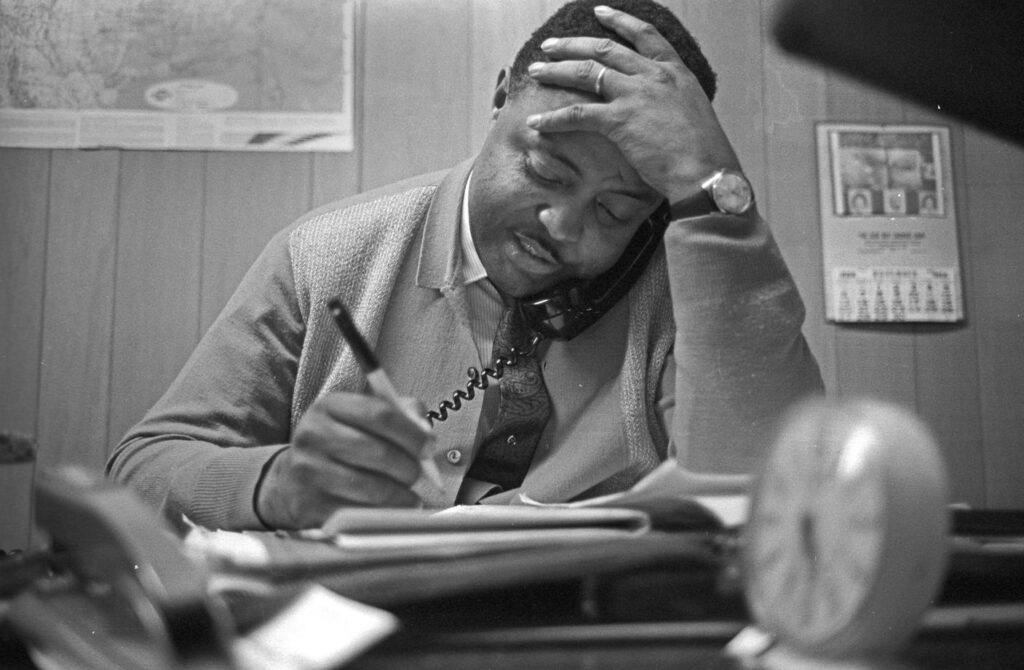
Hosea Williams planning SCLC Chicago civil rights campaign. Bob Fitch, photographer. Chicago, IL. 1966.
The Bob Fitch Photography Archive. Stanford University Libraries. https://searchworks.stanford.edu/view/vn085kg3710.
“The First Black Federal Research Chemist South of the Mason-Dixon Line”
There is no ready evidence of the exact year when the scientific staff of ARS became officially integrated. An intriguing clue, however, lies in the documentation about the chemist Hosea Lorenzo Williams (1926 – 2000).
Williams held a BS in chemistry from Morris Brown College and a master’s degree in chemistry from Atlanta University. From 1952 to 1963 he worked in Savannah, Georgia at the Bureau of Entomology and Plant Quarantine and, according to his New York Times obituary, was the USDA’s “first black research chemist south of the Mason-Dixon Line.” When the ARS was established in 1953, the Bureau was abolished and the USDA facility where Williams worked might have become part of the new agency, although this administrative transformation remains murky. In any event, Williams’ employment as a Black chemist within USDA is clear, although his time there was not uniformly fulfilling to him.
Two interviews, one from 1968 and one from 1970, document Williams saying the following about his time at USDA:
“’I was a very, very good chemist [but]…I’ll never forget how a white man who had less experience and seniority than I was hired from a meat and packing company and given the job of assistant section chief…. During those days, I immersed myself in my duties in the laboratory, working 12 to 14 hours a day to become an excellent chemist. Later on in my career I realized that I was being used for window dressing – to lead visiting officials to believe that the place was really integrated. When I did complain of the injustices there, I was nearly forced out of my job.’”
Bastain, H. (February 29, 2020). Black history month: Chemists’ powerful stories & the sociologist who studied them. PLOS Blogs. Absolutely Maybe. https://absolutelymaybe.plos.org/2020/02/29/black-history-month-chemists-powerful-stories-the-sociologist-who-studied-them/.
The Two Minute Warning of 1965: “Bloody Sunday”
After Williams left the USDA he advanced up through the Savannah, Georgia branch of the National Association for the Advancement of Colored People (NAACP) and then joined the Southern Christian Leadership Conference (SCLC), eventually becoming a high-level advisor to Reverend Dr. Martin Luther King, Jr., who later called him “my wild man.” Williams also played a key role in the March from Selma to Montgomery, Alabama in 1965.
In his 2006 book, At Canaan’s Edge: America in the King Years, 1965-68, historian Taylor Branch describes the events that culminated in the confrontation that occurred on March 7, 1965 on the Edmund Pettus Bridge on Selma, Alabama. This is the event, commonly known as “Bloody Sunday” where John Lewis—later a House Representative for Georgia’s Fifth Congressional District—was seriously injured with a fractured skull.
“What the [news cameras] recorded as [Hosea] Williams and [John] Lewis continued methodically down the slope was an eerie silence, broken by the snorting of horses. After they had covered roughly a hundred yards of level ground, a quietly spoken order ahead introduced unnerving new sights and sounds to the marchers: snapping noises that swept along the barrier ahead as officers secured otherworldly gas masks of bug-eyed goggles and elongated rubber snouts. Williams and Lewis halted the march line at a separation of fifty feet when an unmasked trooper stepped forward with a bullhorn. ‘It would be detrimental to your safety to continue this march,’ said Major John Cloud….’And I’m saying that this is an unlawful assembly. You are to disperse. Go home or go to your church. This march will not continue. Is that clear to you? I’ve got nothing further to say to you….’
Lewis and Williams looked straight ahead, wearing light and dark raincoats, respectively, each with a button tab collar pushing forward his necktie….
After one minute and five seconds, Major Cloud addressed his front unit without the bullhorn: ‘Troopers, advance.’” p. 50-51.
This moment was recorded in the iconic photograph Two Minute Warning.
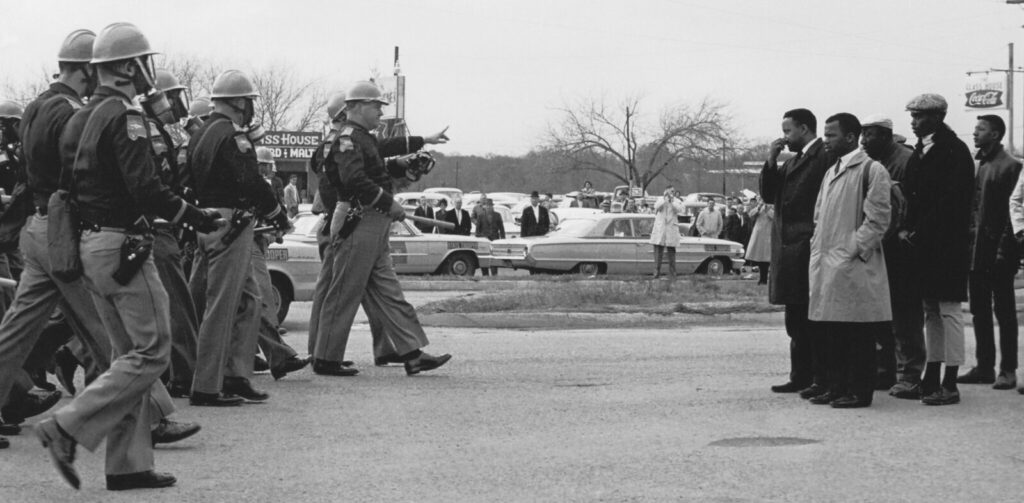
“Two minute warning” by Spider Martin is licensed under CC BY-NC 2.0. Global Public Affairs of the United States Department of State.
https://www.flickr.com/photos/iip-photo-archive/23854979734/sizes/l/.
King joined the demonstrators in Selma three days later and the march was successfully concluded from Selma to Montgomery, Alabama.
Here is Williams (on the left) walking with King on a happier day just over a year later.
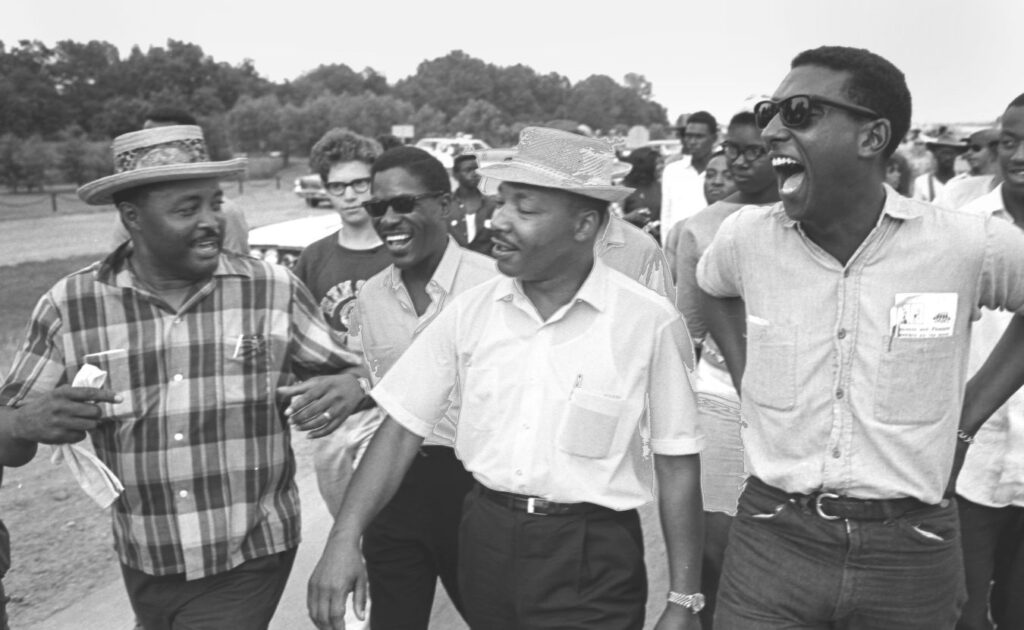
Hosea Williams, Bernard Lee, Martin Luther King Jr., & Stokely Carmichael enjoy a moment of levity.
Bob Fitch, photographer. Mississippi, June 1966. The Bob Fitch Photography Archive. Stanford University Libraries.
https://exhibits.stanford.edu/fitch/catalog/nt228dt9179.
After leaving the SCLC Williams won several political positions, including membership on the Georgia General Assembly, the Atlanta City Council, and as a DeKalb County Georgia commissioner. Williams is shown here (second figure from the right) as part of the 1982 USDA Honor Awards Committee when he was a Georgia State Representative.
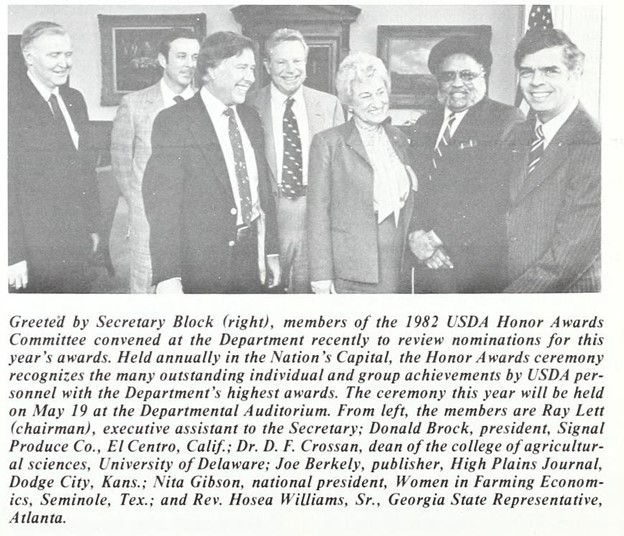
U.S. Department of Agriculture (1982). Employee newsletter of the U.S. Department of Agriculture. 41(7).
U.S. Department of Agriculture. https://archive.org/details/usda41unit.
The Final March
After a life of science and politics, Williams died in 2000. A New York Times article described his funeral:
“Throughout a day of remembrance and tribute, there was a certain poignance that Mr. Williams, one of the movement’s most energetic demonstrators, had died of illness and age and not of the sudden violence that took so many of his colleagues. Before his nearly four-hour funeral in the new sanctuary of Ebenezer Baptist Church, which stands across Auburn Avenue from Dr. King’s former pulpit, one civil rights veteran after the next walked past his open coffin.
Some acted as if they were looking in a mirror. Some said as much.
‘The sadness is that if Hosea can die, all of us must,’ the Rev. Jesse Jackson said in his eulogy. ‘He exposes our mortality.’”
Sack, K. (November 22, 2000). A final march for Hosea Williams, and many tributes.
New York Times, Section A, Page 16. https://www.nytimes.com/2000/11/22/us/a-final-march-for-hosea-williams-and-many-tributes.html.
“All Men are Brothers” at the U.S. Department of Agriculture, 1965
While Williams was working beside Reverend Dr. Martin Luther King, Jr., the U.S. Department of Agriculture was making some effort to acknowledge the events of the day. The USDA Employee News Bulletin for January 27th, 1965 was encouraging a recognition of “Brotherhood Week” as a way of facing to a “greater or lesser degree with the problem of diversity; people of different racial, religious, and cultural backgrounds who must learn to live together in peace and justice. Continuing “Action” and “work: toward the accomplishment of these goals is the only fulfillment of both universal brotherhood and democracy.” (https://archive.org/details/usda24unit/page/n6/mode/1up)
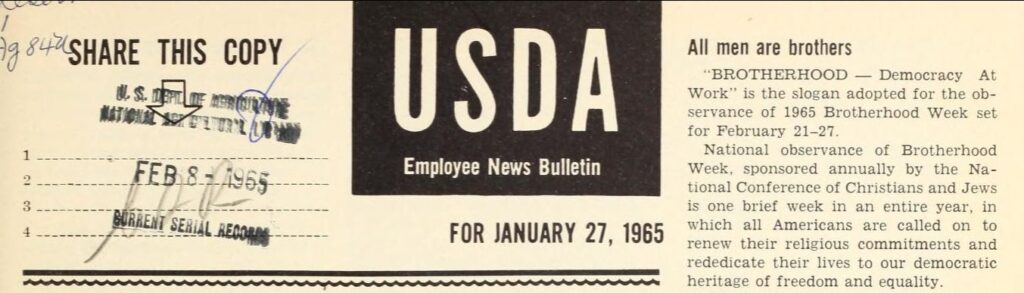
USDA Employee Newsletter. XXIV(16), August 11, 1965. P. 2. https://archive.org/details/usda24unit/page/n53/mode/1up.
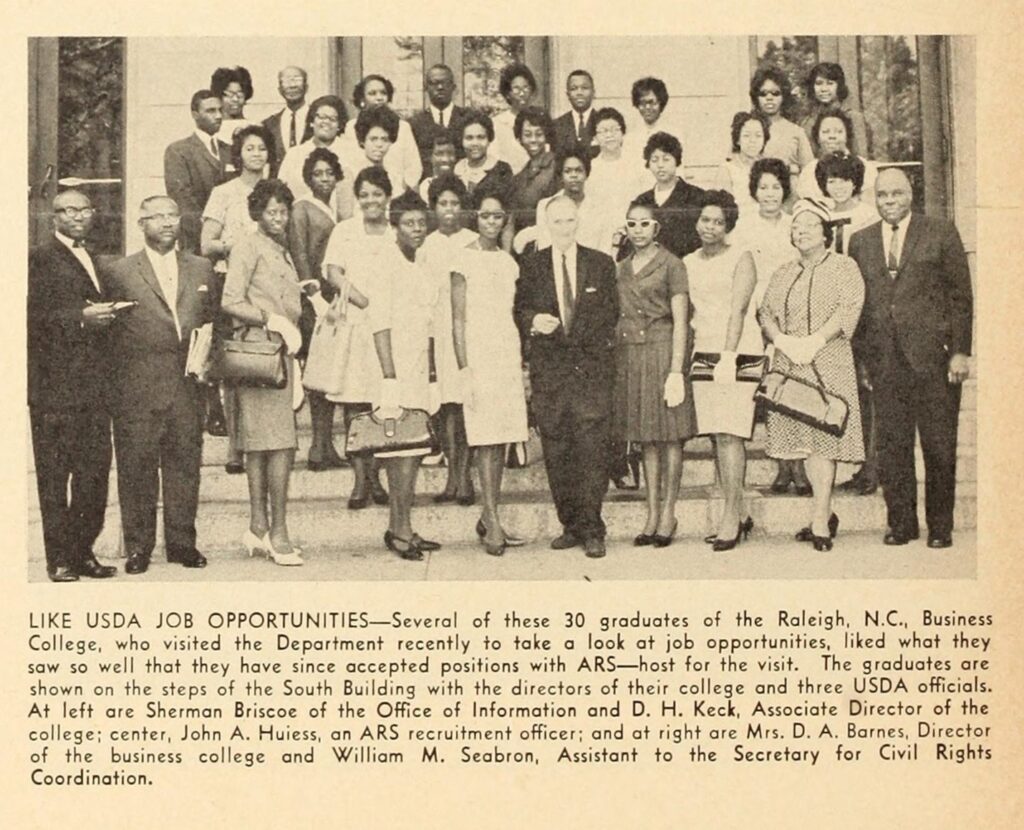
The Bulletin also recorded the recruitment of thirty recent Black business college graduates to ARS by USDA officials from the Office of Information and the Assistant to the Secretary for Civil Rights Coordination.
The U.S. Department of Agriculture published many materials at the start of the twentieth century to help farmers establish, grow, and manage this crop. Here is a sample of these publications.
Documenting Progress in USDA Equal Opportunity Employment
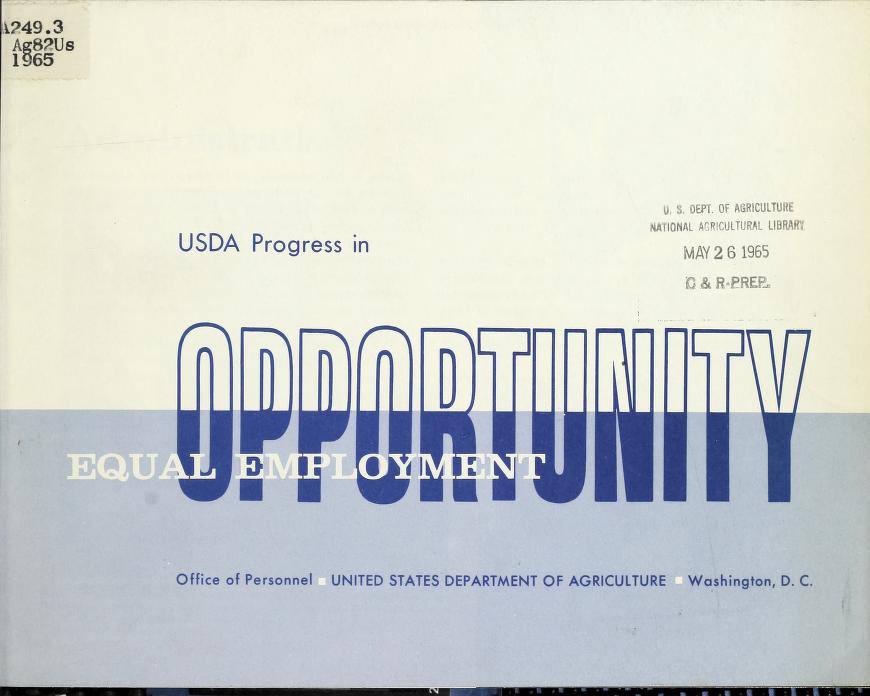
A 1965 USDA publication was published to document “in pictorial form some of the improved conditions within the Department for employees to advance to more challenging jobs, and for eligible applicants to obtain employment on the basis of one criteria [sic] – ability” (From the Foreword by Carl B. Barnes, Director of Personnel).
U.S. Department of Agriculture. Office of Personnel. (1965). USDA Progress in Equal Employment Opportunity. U.S. Department of Agriculture. https://archive.org/details/CAT10681080.
Within the section on research, six Black USDA scientists are pictured. Here are their portraits, along with their contributions to the scientific record made available by the National Agricultural Library, through Scopus, the NAL collection in the Internet Archives, or the NAL Digital Collections.
Rex Ellis, Research Chemist
Beltsville, MD
Listed specialty: Causes of meat spoilage and means of preventing itEducation: B.S. Agricultural and Technical College of North Carolina. Work toward M.S. American University
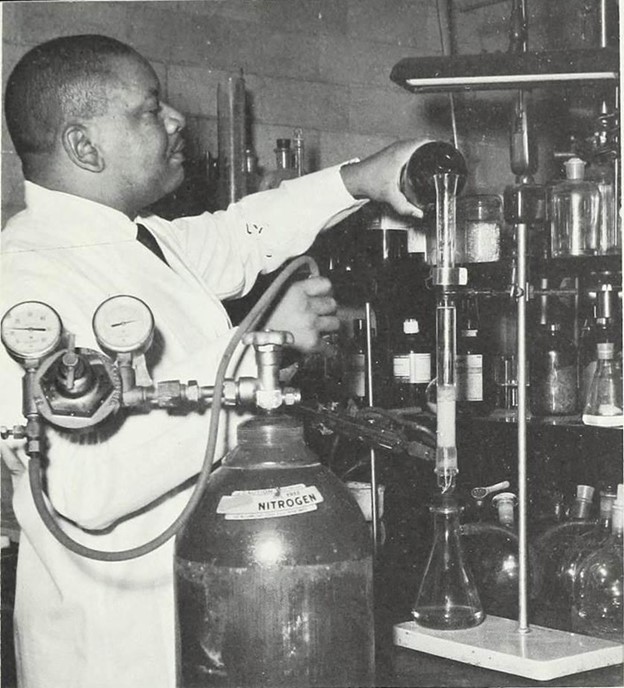
Ellis, R., Currie, G.T., Gaddis, A.M. (1971). Metal ion catalysis of autoxidation in a lard gel. Journal of the American Oil Chemists Society, 48(11), pp. 640-644. DOI: 10.1007/BF02638508
Ellis, R., Currie, G.T., Thronton, F.E., Bollinger, N.C., Gaddis, A.M. (1968). Carbonyls in Oxidizing Fat. 11. The Effect of the Pro‐oxidant Activity of Sodium Chloride on Pork Tissue. Journal of Food Science, 33(6), pp. 555-561. DOI: 10.1111/j.1365-2621.1968.tb09073.x
Ellis, R., Gaddis, A.M. (1959). Paper Chromatography of 2,4-Dinitrophenylhydrazones: Estimation of 2-Alkanone, n-Alkanal, Alk-2-enal, and Alk-2,4-dienal Derivatives. Analytical Chemistry, 31(12), pp. 1997-2000. DOI: 10.1021/ac60156a034
Ellis, R., Gaddis, A.M. (1965). Girard T hydrazones of 2-alkanones, n-alkanals, alk-2-enals, and alk-2,4-dienals. Analytical Biochemistry, 13(3), pp. 565-567. DOI: 10.1016/0003-2697(65)90353-2
Ellis, R., Gaddis, A.M., Currie, G.T. (1958). Paper Chromatography of 2,4-Dinitrophenylhydrazones of Saturated Aliphatic Aldehydes. Analytical Chemistry, 30 (4), pp. 475-479.DOI: 10.1021/ac60136a006
Ellis, R., Gaddis, A.M., Currie, G.T. (1961). Carbonyls in Qxidizing Fat. IV. The Role of Various Fatty Acid Components in Carbonyl Generation. Journal of Food Science, 26(2), pp. 131-138. DOI: 10.1111/j.1365-2621.1961.tb00782.x
Ellis, R., Gaddis, A.M., Currie, G.T. (1966). Carbonyls in Oxidizing Fat. IX. Aldehydes Isolated from Autoxidized Methyl Arachidonate. Journal of Food Science, 31(2), pp. 191-195. DOI: 10.1111/j.1365-2621.1966.tb00477.x
Ellis, R., Gaddis, A.M., Currie, G.T., Powell, S.L. (1968). Carbonyls in oxidizing fat: XII. The isolation of free aldehydes from autoxidized triolein, trilinolein and trilinolenin. Journal of the American Oil Chemists’ Society, 45(8), pp. 553-559. DOI: 10.1007/BF02667169
Ellis, R., Gaddis, A.M., Currie, G.T., Thornton, F.E. (1970). Sodium Chloride Effect on Autoxidation of the Lard Component of a Gel. Journal of Food Science, 35(1), pp. 52-56. DOI: 10.1111/j.1365-2621.1970.tb12366.x
Ellis, R., Kimoto, W.I., Bitman, J., Edmondson, L.F. (1974). Effect of induced high linoleic acid and tocopherol content on the oxidative stability of rendered veal fat. Journal of the American Oil Chemists’ Society, 51(2), pp. 4-7. DOI: 10.1007/BF02545204
Gaddis, A.M., Ellis, R. (1959). Carbonyls in oxidizing fat. II. The identity and amounts of steam volatile monocarbonyls in a rancid freezer-stored pork fat. Journal of Food Science, 24(4), pp. 392-400. DOI: 10.1111/j.1365-2621.1959.tb17289.x
Gaddis, A.M., Ellis, R. (1959). Paper Chromatography of 2,4-Dinitrophenylhydrazones: Resolution of 2-Alkanone, n-Alkanal, Alk-2-enal, and Alk-2,4-dienal Derivatives. Analytical Chemistry, 31(5), pp. 870-875.b DOI: 10.1021/ac60149a041
Gaddis, A.M., Ellis, R., Currie, G.T. (1959). Carbonyls in oxidizing fat. I. Separation of steam volatile monocarbonyls into classes. Journal of Food Science, 24(3), pp. 283-297. DOI: 10.1111/j.1365-2621.1959.tb17274.x
Gaddis, A.M., Ellis, R., Currie, G.T. (1960). Carbonyls in oxidizing fat III. The distribution of volatile and non-volatile carbonyls. Journal of Food Science, 25(4), pp. 495-506. DOI: 10.1111/j.1365-2621.1960.tb00360.x
Gaddis, A.M., Ellis, R., Currie, G.T. (1961). Carbonyls in oxidizing fat. V. The composition of neutral volatile monocarbonyl compounds from autoxidized oleate, linoleate, linolenate esters, and fats. Journal of the American Oil Chemists’ Society, 38(7), pp. 371-375. DOI: 10.1007/BF02633583
Gaddis, A.M., Ellis, R., Currie, G.T. (1961). Girard T reagent for carbonyls. Nature, 191(4796), pp. 1391-1392. DOI: 10.1038/1911391b0
Gaddis, A.M., Ellis, R., Currie, G.T. (1964). Carbonyls in Oxidizing Fat. VI. The Girard T Reagent in the Isolation and Determination of Micro Amounts of N‐Aliphatic Aldehydes and 2‐Alkanones. Journal of Food Science, 29(1), pp. 6-15. DOI: 10.1111/j.1365-2621.1964.tb01684.x
Gaddis, A.M., Ellis, R., Currie, G.T. (1966). Carbonyls in oxidizing fat. VIII. Effect of the Pool and Klose method on monocarbonyl precursors in autoxidized lard. Journal of the American Oil Chemists Society, 43(3), pp. 147-150. DOI: 10.1007/BF02646289
Gaddis, A.M., Ellis, R., Currie, G.T., Thornton, F.E. (1966). Carbonyls in oxidizing fat. X. Quantitative differences in individual aldehydes isolated from autoxidized lard by mild methods of extraction. Journal of the American Oil Chemists’ Society, 43(4), pp. 242-244. DOI: 10.1007/BF02641094
Gaddis, A.M., Ellis, R., Shamey, J., Currie, G.T. (1965). Carbonyls in oxidizing fat. VII. A comparison of methods of isolating monocarbonyl compounds. Journal of the American Oil Chemists’ Society, 42(7), pp. 620-624. DOI: 10.1007/BF02541300
Gaddis, A.M., Ellis, R.E.X. (1957). Volatile saturated aliphatic aldehydes in rancid fat. Science, 126(3277), p. 745. DOI: 10.1126/science.126.3277.745
Kimoto, W.I., Ellis, R., Wasserman, A.E., Oltjen, R. (1974). Autoxidative stability of rendered fat from growing and mature steers fed protected safflower oil. Journal of the American Oil Chemists Society, 51 (9), pp. 401-403. DOI: 10.1007/BF02635016
Kimoto, W.I., Ellis, R., Wasserman, A.E., Oltjen, R., Wrenn, T.R. (1974). Fatty acid composition of muscle phospholipids from calves, and growing and mature steers fed protected safflower oil. Journal of Food Science, 39(5), pp. 997-1001. DOI: 10.1111/j.1365-2621.1974.tb07295.x
Alden H. Reine, Research Chemist
New Orleans, LA
Listed specialty: Improvement of “wash-wear” cotton fabrics
Education: B.S. Xavier University. M.S. The University of Notre Dame
(Reine later earned a Ph.D. in Chemistry from the University of New Orleans)
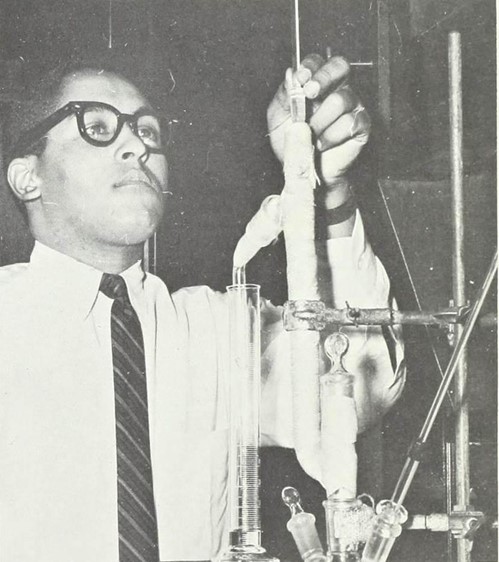
Portnoy, N.A., Reine, A.H., Arthur Jr., J.C. (1972). Synthesis of nitrogenous derivatives of cellulose-poly(methyl vinyl ketone) copolymers, Oximes, semicarbazones, and hydantoins. Carbohydrate Research, 24(1), pp. 198-201. DOI: 10.1016/S0008-6215(00)82280-6
Reine, A.H., Arthur, J.C., Jr. (1972). Photoinitiated Polymerization of Methacrylamide with Cotton Cellulose. Textile Research Journal, 42 (3), pp. 155-158. DOI: 10.1177/004051757204200304
Reine, A.H., Arthur, J.C., Jr., George, M. (1972). Graft copolymers of cellulose and vinylic ketones. I. Preparation of poly(methyl vinyl ketone)–cotton cellulose copolymers. Journal of Applied Polymer Science, 16 (8), pp. 1893-1899. DOI: 10.1002/app.1972.070160803
Reine, A.H., Arthur, J.C., Jr., Portnoy, N.A. (1973). Photoinitiated Polymerization onto Cotton: Copolymerization of Acrylamide Monomers with Cotton. Textile Research Journal, 4(11), pp. 638-641. DOI: 10.1177/004051757304301103
Reine, A.H., Hinojosa, O., Arthur, J.C., Jr. (1973). ESR studies of free radicals in photo‐initiated graft polymerization reactions with cotton cellulose. Journal of Applied Polymer Science, 17 (11), pp. 3337-3343. DOI: 10.1002/app.1973.070171108
Reine, A.H., Stegink, S.J. (1988). Qualitative and quantitative thin-layer chromatographic analysis of polar lipids from leaves of glanded and glandless cotton genotypes. Journal of Chromatography A, 437 (C), pp. 211-219. DOI: 10.1016/S0021-9673(00)90384-4
Calvin Corley, Chemist
Beltsville, MD
Listed specialty: Composition of effective insecticides
Education: B.S. Allen University. Work toward M.S. American University
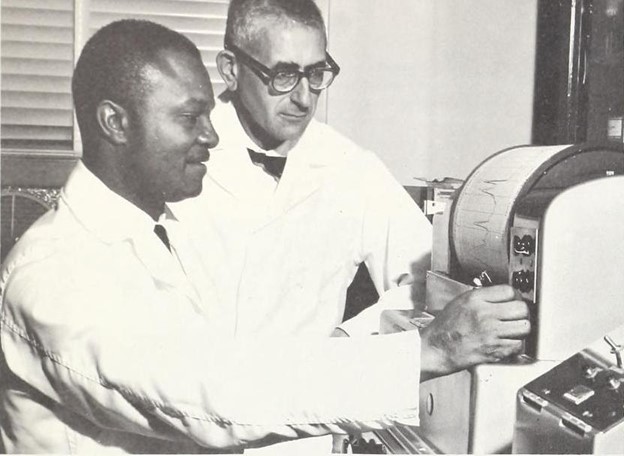
Barthel, W.F., Murphy, R.T., Mitchell, W.G., Corley, C. (1960). The Fate of Heptachlor in the Soil Following Granular Application to the Surface. Journal of Agricultural and Food Chemistry, 8 (6), pp. 445-447. DOI: 10.1021/jf60112a006
Corley, C., Beroza, M. (1968). Gas Chromatographic Determination of Malathion and Its Oxygen Analog, Mala-oxon. Journal of Agricultural and Food Chemistry, 16 (2), pp. 361-363. DOI: 10.1021/jf60156a021
Corley, C., Miller, R.W., Hill, K.R. (1974). Determination of N (4 chlorophenyl) N (2,6 difluorobenzoyl) urea in milk by high speed liquid chromatography. Journal of the Association of Official Analytical Chemists, 57 (6), pp. 1269-1271. DOI: 10.1093/jaoac/57.6.1269
Miller, R.W., Cecil, H.C., Carey, A.M., Corley, C., Kiddy, C.A. (1979), Effects of feeding diflubenzuron to young male holstein cattle. Bulletin of Environmental Contamination and Toxicology, 23 (1), pp. 482-486. DOI: 10.1007/BF01769991
Miller, R.W., Corley, C., Hill, K.R. (1975). Feeding TH 6040 to chickens: effect on larval house flies in manure and determination of residues in eggs. Journal of economic entomology, 68 (2), pp. 181-182. DOI: 10.1093/jee/68.2.181
Miller, R.W., Corley, C., Shufelt, S.R. (1976). Effects of feeding TH-6040 to two breeds of chickens. Journal of economic entomology, 69 (6), pp. 741-743. DOI: 10.1093/jee/69.6.741
Rumsey, T.S., Putnam, P.A., Davis, R.E., Corley, C. (1967). Distribution of p, p’-DDT Residues in Adipose and Muscle Tissues of Beef Cattle. Journal of Agricultural and Food Chemistry, 15 (5), pp. 898-901. DOI: 10.1021/jf60153a024
Rusoff, L.L., Temple, R.S., Myers, R.G., Newsom, L.D., Burns, E.C., Barthel, W.F., Corley, C., Allsman, A. (1963). Insecticide residues: Residues in Fatty Tissues and Meat of Cattle Grazing on Pastures Treated with Granular Heptachlor. Journal of Agricultural and Food Chemistry, 11 (4), pp. 289-291. DOI: 10.1021/jf60128a004
Westlake, W.E., Corley, C., Murphy, R.T., Barthel, W.F., Bryant, H., Schutzmann, R.L. (1963). Insecticide residues: Chemical Residues in the Milk of Cows Grazed on Chlordan-Treated Pasture. Journal of Agricultural and Food Chemistry, 11 (3), pp. 244-246. DOI: 10.1021/jf60127a003
Albert J. Fryar, Physical Chemist
Beltsville, MD
Listed specialty: Compounds which may be used as meat tenderizers
Education: B.S. Shaw University. Further work at USDA Graduate School
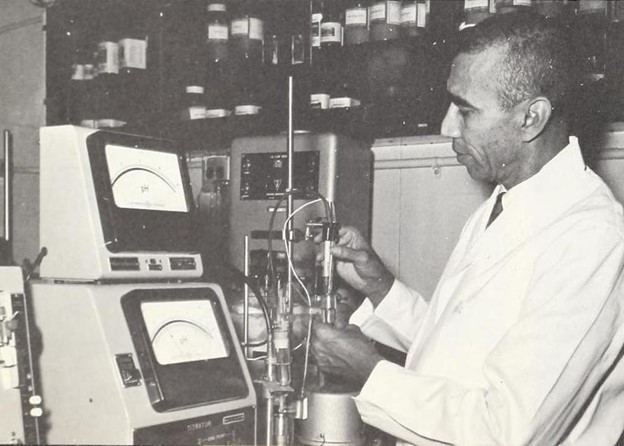
Fryar, A.J., Gibbs, R.J. (1963). Bovine muscle proteins IV. Preparation of myosin and actomyosin. Experientia, 19 (9), pp. 493-494. DOI: 10.1007/BF02150670
Florence M. Richardson, Chemist
Beltsville, MD
Listed specialty: Fabric care during wear and laundering – especially the effects of bleach, soap, and detergents
Education: B.S. Fisk University
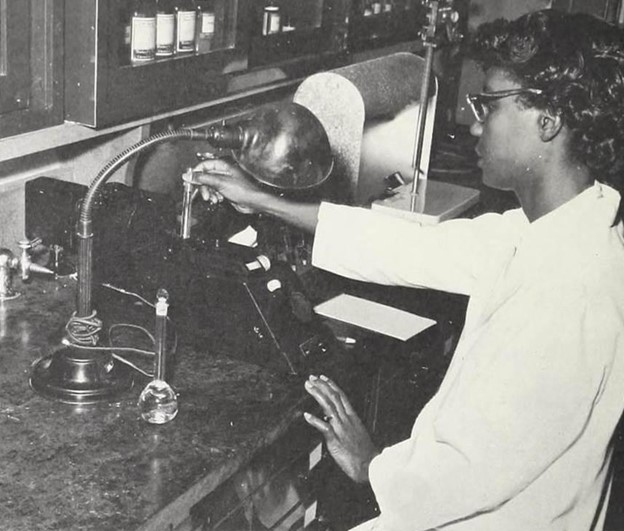
Richardson, F. (1965). Removing stains. Consumers All. Yearbook of Agriculture, p. 373-376.
Theodore A. Wilcox, Biologist
Beltsville, MD
Listed specialty: Virus which may be used in controlling insects
Education: B.S. Agricultural and Technical College of North Carolina
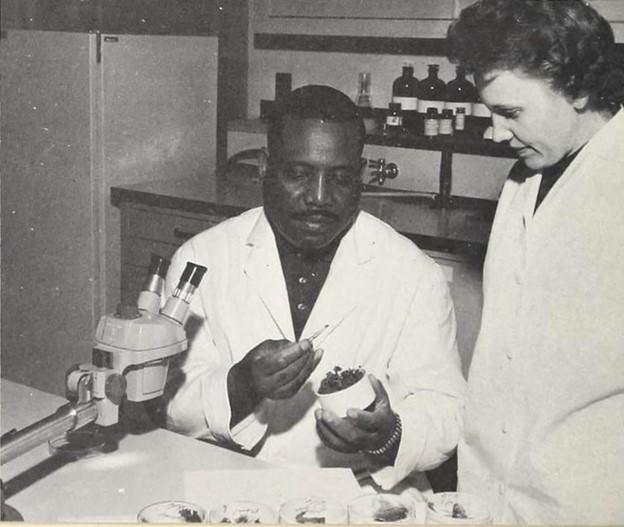
Adams, J.R., Goodwin, R.H., Wilcox, T.A. (1977).Electron microscopic investigations on invasion and replication of insect baculoviruses in vivo and in vitro. Biologie Cellulaire, 28 (3), pp. 261-268.
Adams, J.R., Tompkins, G.J., Wilcox, T.A., Schroder, R.F. (1979). Two virus-like particles in the Mexican bean beetle, Epilachna varivestis. Journal of Invertebrate Pathology, 33 (1), pp. 111-114. DOI: 10.1016/0022-2011(79)90139-3
Adams, J.R., Wallis, R.L., Wilcox, T.A., Faust, R.M. (1968). A previously undescribed polyhedrosis of the zebra caterpillar, Ceramica picta. Journal of Invertebrate Pathology, 11 (1), pp. 45-58. DOI: 10.1016/0022-2011(68)90052-9
Adams, J.R., Wilcox, T.A. (1965). A viruslike disease condition in the European corn borer, Ostrinia nubilalis (Hübner). Journal of Invertebrate Pathology, 7 (2), pp. 265-266. DOI: 10.1016/0022-2011(65)90052-2
Adams, J.R., Wilcox, T.A. (1968). Histopathology of the almond moth, Cadra cautella, infected with a nuclear-polyhedrosis virus. Journal of Invertebrate Pathology, 12 (3), pp. 269-274. DOI: 10.1016/0022-2011(68)90326-1
Adams, J.R., Wilcox, T.A. (1982). Scanning electron microscopical comparisons of insect virus occlusion bodies prepared by several techniques. Journal of Invertebrate Pathology, 40 (1), pp. 12-20. DOI: 10.1016/0022-2011(82)90031-3
Stürckow, B., Adams, J.R., Wilcox, T.A. (1967). The neurons in the labellar nerve of the blow fly. Zeitschrift für Vergleichende Physiologie, 54 (2), pp. 268-289. DOI: 10.1007/BF00298032
“Seekers of Information”
The USDA Progress in Equal Employment Opportunity document also pictured one Black employee of the National Agricultural Library: Minnie N. Fuller who worked as a reference librarian.
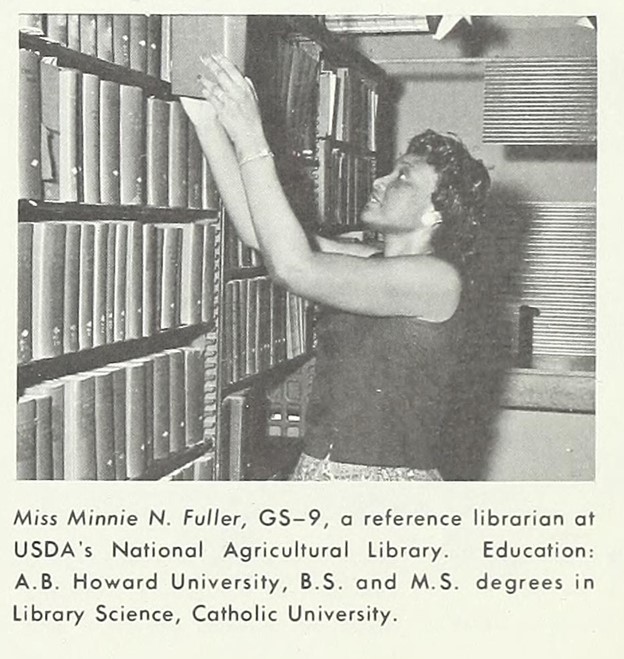
Fuller authored two publications while at NAL:
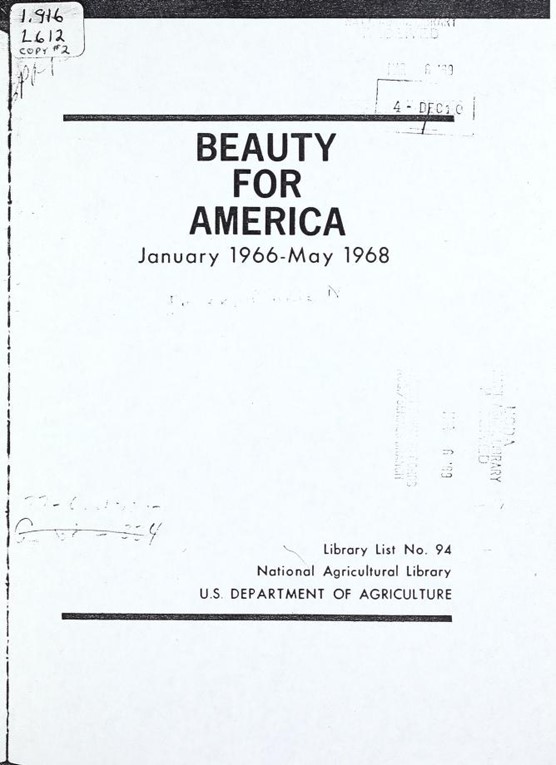
Fuller, M.N. (1968). Beauty for America, January 1966-May 1968, Library List, 94. U.S. Department of Agriculture. National Agricultural Library. http://archive.org/details/beautyforamerica94full.
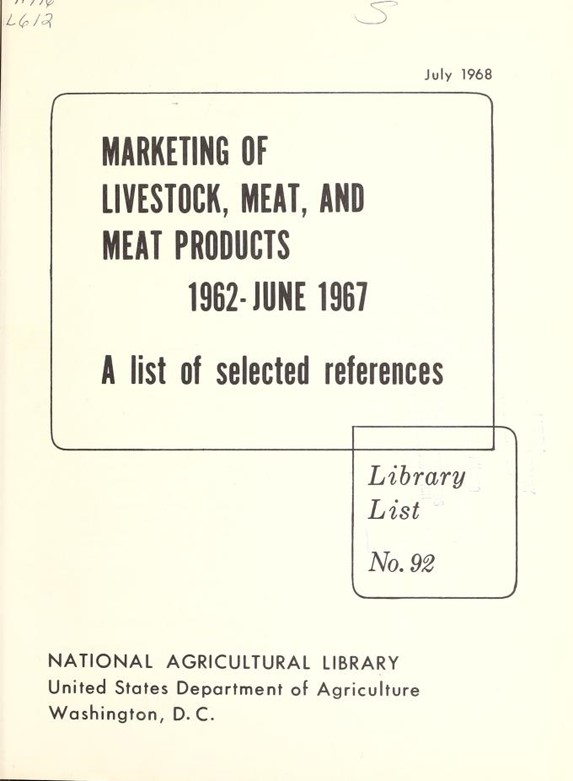
Fuller, M.N. (1968). Marketing of Livestock, Meat, and Meat Products, 1962-June 1967: A List of Selected References. (With Betty B. Baxtresser). Library List, 92. U.S. Department of Agriculture. National Agricultural Library. https://archive.org/details/marketingoflives92full/
Fuller was also pictured with Floyd Harvey, another Black NAL employee in a photograph within NAL’s Special Collections.
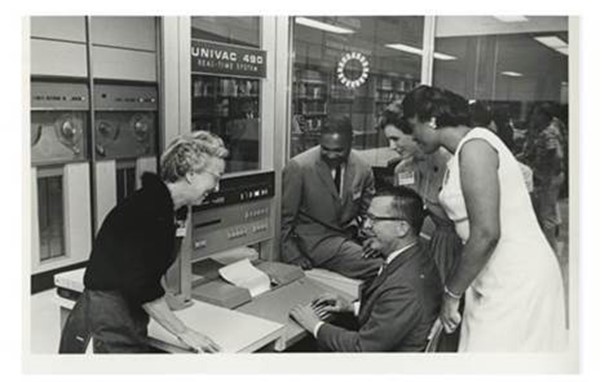
The subject of the photograph was described in an associated article from the Saturday, November 6, 1965 issue of Memphis World:
“Seekers of information in libraries of the future may walk up to a library electronic computer, punch a keyboard to indicate the information needed, wait a few seconds and then receive out of the instrument’s high speed automatic typewriter the information desired from the local library, or one a thousand miles away. Looking toward the future, the U.S. Department of Agriculture sent four of its professional librarians to the New York World’s Fair to get concentrated training in the operation of an electronic library under direction of the American Library Association’s Gordon Martin, seated at the console of a UNIVAC [490] computer. Others, left to right are: Miss Winifred Woodward, librarian at USDA’s Eastern Utilization Research Laboratory, Wyndomoor, Pa.; Floyd Hardy, Mrs. Patricia Condon and Miss Minnie N. Fuller, librarians of USDA’s National Agricultural Library, Washington, D.C. The group appears amused at the capability of this sophisticated machine.”
Beauchamp, J.A. (Saturday, November 6, 1965). Liberty of the future. Memphis World, 34(18), 8. Memphis World Publishing Co. Rhodes College Digital Archives. http://hdl.handle.net/10267/32941.

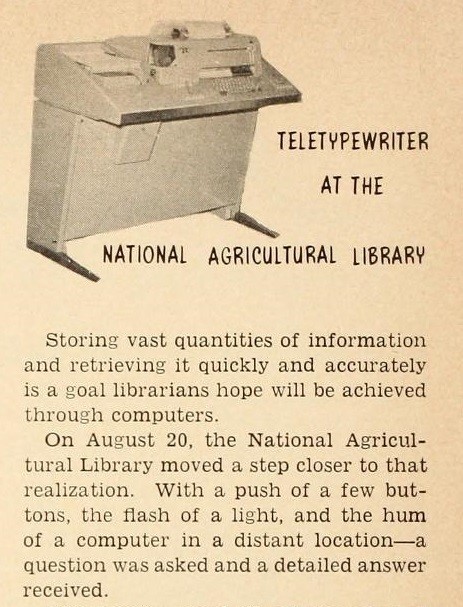
This visit was also documented in a USDA Employee Bulletin from September 30, 1965, XXIV(20), p, 2 and was offered as a path to a new future of automated information storage and retrieval. The UNIVAC 490 was dubbed the “Teletypewriter at the National Agricultural Library,” although it was never implemented at NAL (https://archive.org/details/usda24unit/page/n53/mode/1up).