Grey Literature at NAL
15 March 2026

Written by Emily Marsh
The National Agricultural Library (NAL) has digitized over a quarter of a million documents and have made them freely available through the Internet Archives (IA) (https://archive.org/details/usdanationalagriculturallibrary). These materials held by the USDA take on many different forms including reports, farmer and consumer guides, business catalogs, bulletins, circulars, leaflets, market inventories, yearbooks, radio scripts, architectural plans, recipes, maps, and images. While these documents are historically significant to agriculture, it is often difficult, however, for any but the most determined searcher to discover, access, understand, and appreciate their inner content. This short review aims to describe the values and challenges offered by this type of document, along with illustrative examples from NAL’s IA collection.
Grey Literature
“Grey literature in its variety of formats, is an essential source of knowledge, yet it remains partially hidden from the public domain because, to a great extent, it has not been catalogued or published. Indeed, although it has had a long history particularly in the areas of science and technology, its importance was not always recognized as contributing significantly to the world’s body of knowledge.”
Patrickson-Stewart, S.G. (2025). Grey literature. In C. Williams & S. Renwick (Eds.). Encyclopedia of libraries, librarianship, and information science. Volume 1. (pp. 438-455). Academic Press. https://doi.org/10.1016/B978-0-323-95689-5.00110-3, p. 444
It is widely accepted that journal articles play a central role in many disciplines, especially those in the sciences. As described by Seeber, “for more than 200 years, scientific papers published in scientific journals have been a major avenue to make research results public” (2024, p. 2). While the importance of peer-reviewed journal articles to modern agricultural scholarship cannot be denied, the value that other publication types can bring to serious research pursuits is being recognized. One of the most discussed alternative forms in the library and information world is that of grey literature. A succinct, albeit scant, definition of grey literature is “unpublished literature, that is, literature not published by commercial publishers” (Patrickson-Stewart, 2025, p. 438). Since this definition is broad enough to encompass the bulk of NAL’s digitized material, it will be of use to consider the grey literature category in some depth.
Charles P. Auger’s 1975 monograph Use of Reports Literature is often cited as the landmark work in the study of grey literature, yet the term itself never appears. Indeed, Auger’s decision to focus on reports as a general stand-in for an entire publication type (“Reports Literature”) is revealing. For Auger, the typical report displays all of the characteristics of the larger category, taken up later by scholars as grey literature. Auger defines a report as an unpublished document, created with a specific, practical purpose, aimed and distributed to a specific, limited audience, but not easily accessible through regular information retrieval channels. This definition isolates the essential facets of the grey literature category: 1. publication status, 2. creator objective, 3. intended audience, 4. distribution target, and 5. degree of availability.
Patrickson-Stewart chronicles the long and somewhat disorderly history of this concept, as studied by information professionals (2025). The first explicit, significant definition of grey literature was adopted by attendees of a 1978 seminar held in York, Great Britain, sponsored by various European organizations, hence the adoption of the British spelling for “grey” (Alberani & De Castro, 2001). The definition was not limited to reports, but explicitly identified the five key characteristics initially noted by Auger, stated only somewhat differently:
- Grey literature is not produced by traditional commercial publishers
- It is presumed to be of interest to a small audience
- It is produced in limited quantities
- It is distributed through limited channels
- It was either not created with publication in mind, or had unconventional origins
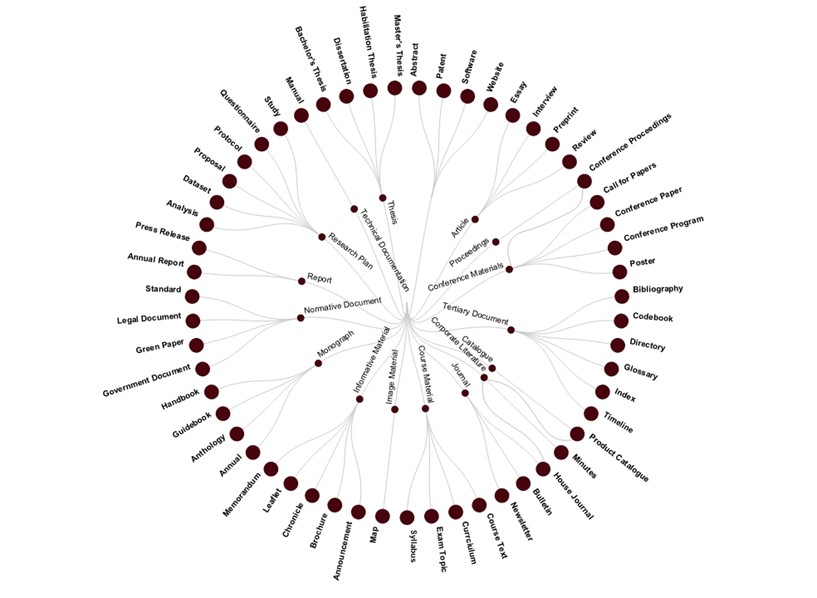
The attendees of later conferences in Luxembourg (1997) and Prague (2010) developed their own definitions which built upon these attributes, either emphasizing or minimizing selected characteristics (Schöpfel, 2011). A 2010 project led by Petra Pejšová attempted to create a comprehensive, well-ordered taxonomy of grey literature types. This taxonomy was proposed as a model for repository metadata to increase both accurate knowledge representation within information systems and efficient search and discovery for the users of those systems (2010; 2011). The figure shows the fifty-five terms identified by Pejšová and her colleagues and the way they have been ordered into categories.
Adams, Smart, and Huff (2017) propose dividing grey literature documents up into three tiers, as shown in the figure.
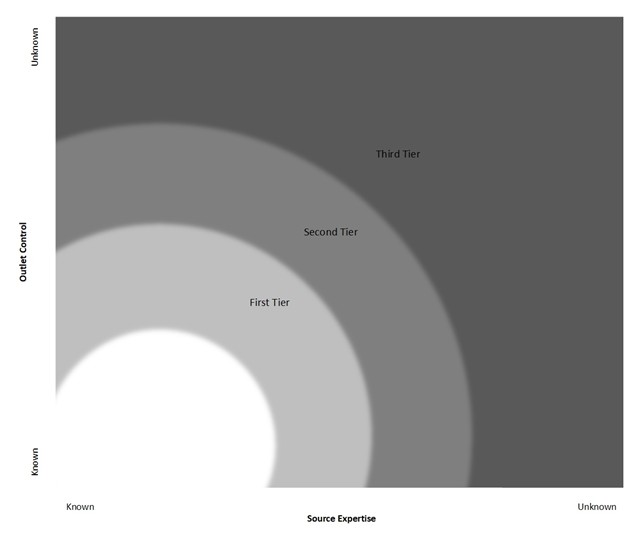
Within this model, documents are classed into tiers based on the degree to which they vary across two dimensions: (1) retrievability: the ease with which a document can be identified and accessed and (2) credibility: the degree to which a document is a product of demonstrable expertise. Both retrievability and credibility are presumed to exist on a scale with three values: significant, moderate, or low. All of these metrics are presumed to be only approximations, so the permeable separations between the three tiers are portrayed with fuzzy borders. Within the figure retrievability is renamed by Adams and his co-authors as “outlet control” while credibility is relabeled “source expertise.”
Examples of the three document types are provided by Adams, et al.
|
Tier Type
|
Reliability & Credibility
|
Example
|
|---|---|---|
|
One
|
Significant
|
books, book chapters, some journals, government reports, think tank publications
|
|
Two
|
Moderate
|
annual reports, news articles, videos, presentations, company publications, non-government organization (NGO) studies, Wiki articles, ads
|
|
Three
|
Low
|
blogs, emails, tweets, letters, catalogues
|
They conclude that documents from all three tiers can aid researchers and should be considered as potentially valuable sources, depending on the nature of a given inquiry. Incidentally, their list of grey literature document candidates echoes that created by other analysts (Bonato, 2018; Schöpfel, 2011), although it omits academic theses and dissertations—items that are usually included in the category. Presumably, they would be classed within Tier One.
This very limited survey reveals some of the challenges of grey literature, regardless of the model selected. While scholars have done valiant work in their attempt to create a true category of literature, their efforts leave the reader with questions. “Information professionals – including archivists, librarians, researchers and teachers – have been contributing to studies on grey literature for nearly 30 years now, compiling a rich corpus of articles and, since 1993, international conference papers on grey literature….The traditional definition of grey literature needs to be refined and supplemented [however] through an accurate analysis of new means of access and distribution” (Schöpfel, 2006, p. 2; 8).
One of the problems with the category arises from its initial conception by Auger. Auger’s construct of “report literature” has acted as the prototype of the entire category of grey literature itself (Rosch, 1978). For many, reports display all of the correct values for each of the essential attributes of the larger category. A report, at least for Auger, is an exemplar of this resource type. It is what the mind reaches for first when searching for an example of grey literature and, like a true prototype, it is the standard against which other category candidates are judged for membership suitability, what Rosch terms as the “typicality effect” or “goodness-of-example rating” (2011).
This purity of category membership has become muddied however, as other scholars expand it to include document types other than reports they deem qualified for the label of grey literature. Again, Schöpfel points out that the conditions for membership of the category vary in ways that are idiosyncratic and, at times, unpredictable (2011). Some scholars emphasize:
- the means of production (g., documents generated from non-commercial publishers);
- the means of dissemination (g., documents with small production runs kept within a small audience);
- the means of creation (g., documents created without peer review);
- the means of purpose (g., documents written to address specific, practical problems);
- the means of permanence (g., documents designed for transient interest and use); and/or
- the means of discovery and accessibility (g., documents that remain outside of traditional information systems).
At this point, there is broad agreement on the kinds of literature most commonly accepted within the category, but there is still some opaqueness around the definition itself. “Advocacy for grey literature can be affected by confusion about what actually constitutes this genre and whether it is reliable (credible). Grey literature experts may assume that the genre is clearly demarcated, but many information users do not recognize the distinction or consider it important” (MacDonald, Ross, Soomai, & Wells, 2015, p. 8).
But this problem of precise definition should not prevent the thoughtful use of this type of information resource. As stated by Pavlov, “indeed, the definition of GL [grey literature] is important but the process of giving a more precise GL specification is endless….Grey literature is a fuzzy set rather than a deterministic one and it is difficult if possible to define it strictly. The same is with commercially printed literature. Who can give a unique and monosemantic definition of white literature or fiction? But it doesn’t prevent it from being published, sold, bought and read” (p. 113). This last observation is especially true, given the value of grey literature to formal systematic literature reviews. This specialized type of research project requires documented exhaustiveness in the types of sources included (Adams, Smart, & Huff, 2017; Paez, 2017; Rothstein & Hopewell, 2009).
This brief review should serve to illustrate several of the inherent problems with the category “grey literature,” that keep recurring, despite the best efforts of scholars, information professionals, and librarianship itself. “In short, the grey literature comes from a complex landscape of information artefacts generated in the course of real-life practices. Assessing this material requires time and complicated trade-offs whose appropriateness will vary according to study context” (Adams, Smart, & Huff, 2017, p. 448).
This review of NAL’s digital grey literature should assist in these efforts of appraisal and implementation. While it is important to keep the overall grey literature construct in mind, the publications and materials that will be covered share traits of even more specific literature types. The first of these types to be considered is that of trade literature.
Trade Literature
“In recent years the potential for trade literature to support the study of a variety of subjects has become apparent. Trade literature is increasingly being used as primary source material in studies ranging from business history to the study of advertising techniques. One use of trade catalogues to date has been in the identification and attribution of objects, particularly by museum curators, conservators and connoisseurs, and a number of historical collections can be found in museum libraries. A growing number of academic libraries with design or construction-related courses and other special libraries are also developing core libraries of current trade literature from key manufacturers of specific products as important resources for staff, students and practitioners. Within the construction industry collections of trade literature are used to assist with the design of buildings and structures and for the specification of appropriate products and materials.”
Archer, B., & Bagshaw, K. (Eds.) (2000). Trade literature: Cataloguing and classification guidelines. ARLIS/UK & Ireland. https://arlis.net/wp-content/uploads/2018/07/tradeliteratureguidelines_text.pdf, p. 4.
In its cataloging guide, The Art Libraries Society of UK and Ireland (ARLIS/UK) offered a definition of trade literature as, “promotional literature produced by, or on behalf of, manufacturers or retailers describing goods for sale. Historic examples of trade literature include trade cards, bill-heads [receipts of business transactions] and price lists as well as more extensive multi-paged catalogues” (Archer & Bagshaw, 2000). Given the large role that agriculture played in American history there is a great deal of this type of material available for study.
Like that of grey literature, the role of trade literature and newspapers in both scholarly inquiry and librarianship has been a topic of some debate and uncertainty, however. It is notable that back in 1919 Marjorie F. Warner of the USDA’s Bureau of Plant Industry advocated for the “bibliographic opportunities in horticulture,” including those offered by sources outside of traditional published scholarship. She described such opportunities in the Bulletin of the American Library Association as awaiting readily in trade literature. “Such catalogs may be of service under various circumstances, as…determining [the (a)] identity of new plants which have been exploited by the trade before receiving botanical recognition; (b) careless use of trade names, which makes it doubtful whether a plant sold and widely known under a given name is actually the botanical species entitled to that name; (c) interest in the date and place of notable advances in plant breeding, production of important hybrids, etc.; (d) origin and history of plants introduced into cultivation from a wild state or from other countries. The uncertainty surrounding the origin or introduction of some of our well-known cultivated plants is surprising, and there is always a chance that some item of information may have appeared in a trade catalog, long before it was taken up by the more enduring literature of the horticultural manuals, or even mentioned in periodicals” (Warner, 1919, p. 181). A notable example of this type of “horticultural bibliography” is Mack’s review and analysis of horticultural catalogs (1991).
Analysts after Warner offered even broader assertions of the value of trade literature. “To the ‘information-conscious’ it must be obvious that there is a great deal of information contained in these brochures describing products and processes which may never be included in journal articles or textbooks, and which could be extremely valuable to research workers and students. Some of them are almost equivalent to a reference work on the subject” (Smith, 1966, p. 31). A special issue of Science & Technology Libraries was devoted to the role of trade literature. The editor observed that, at the time of publication, “[m]any sci-tech librarians have had little or no experience with or knowledge of trade literature…[y]et this type of material plays a vital role in technology and the applied sciences” (Mount, 1990, p. 1). This level of experience and knowledge has since changed even more, affecting both librarians and the larger world of scientific inquiry and scholarship.
An even sharper, more specific observation arose from a 2014 conference reflecting this newfound recognition of value. The importance of trade literature to a “range of researchers (appraisers, conservators, preservationists, restorers, students of material culture/art/decorative art, architectural historians, historians of technology, cultural anthropologists, interior designers, sociologists, and scientists) is beyond reckoning. Trade catalogs ‘can provide a scholar with more images of thoroughly documented artifacts than he could hope to gather in years of souring museums, historical societies, and private collections’ [Ames, 1978, p. 26]. In addition, and no less importantly, they illustrate the history of marketing and track the use of changing printing techniques, as well as provide opportunities for artists and photographers to furnish images” (Seckelson, Ash, Bardhan, Guthrie, & Van Dyk, 2015, p. 268).
Seed, Nursery, and Garden Catalogs: The “Means of Business”
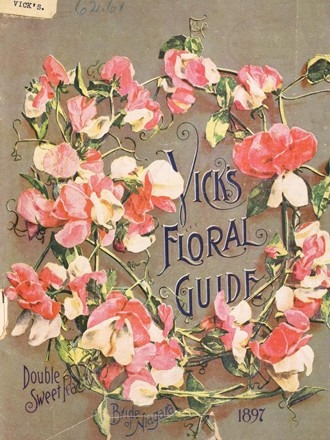
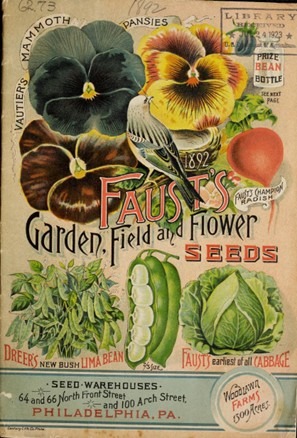
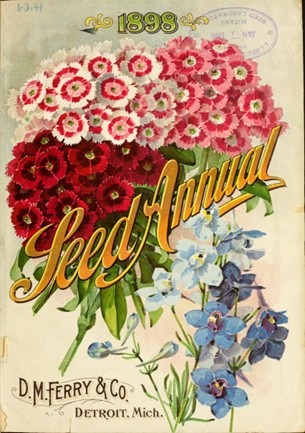
Perhaps the most significant type of trade literature in NAL’s IA collection is that of the agricultural sales catalog. These historical documents describe the seeds, plants, and associated tools and supplies sold by commercial firms to gardeners and, to a lesser extent, farmers. Mickey names the garden catalog as the primary “means of business” for horticultural supply companies (2021, p. 71). He adds, “Nineteenth-century seed and nursery catalogs offered lawnmowers, urns, fencing, and even chickens in addition to flower seeds. They also featured instructions on how to grow flowers and in what style to display them, whether that might be in containers, flower borders, or beds. The catalogs often included an image of a suburban home with a lawn and garden, confirming what was happening around large cities across the country: people were moving to suburbs to have a lawn and a garden of flowers because they wanted to be closer to nature” (Mickey, 2021, p. 33).
This is a large and significant genre because of the size of the market for seeds and nursery supplies among homeowners in the nineteenth century. As described by Lyon-Jeness, “between 1850 and 1880, demand for trees and flowers boomed, spurred on by worldwide plant exploration, the introduction of many new ornamental varieties, and a plethora of agricultural and horticultural publications that encouraged hands-on horticulture and delivered practical advice to would-be gardeners and orchardists….Americans of all ranks and circumstances jumped on the horticultural bandwagon, and domestic landscapes across the nation blossomed with newly established lawns, orchards, shade trees, and fashionable flower gardens. Struggling to meet the seemingly insatiable call for trees and flowers, America’s nursery and seed businesses proliferated. With competition on the rise, well-established firms, along with many new ventures, turned to innovative marketing strategies designed to spark even greater horticultural interest” (2004, p. 382) The most notable “innovative market strategy” was the garden catalog.
Mickey’s earlier review of this genre revealed several themes that cut across companies and catalogs (2013). These seven themes are listed below, along with brief descriptions and illustrations from NAL’s Henry G. Gilbert Nursery and Seed Trade Catalog collection.
Innovation
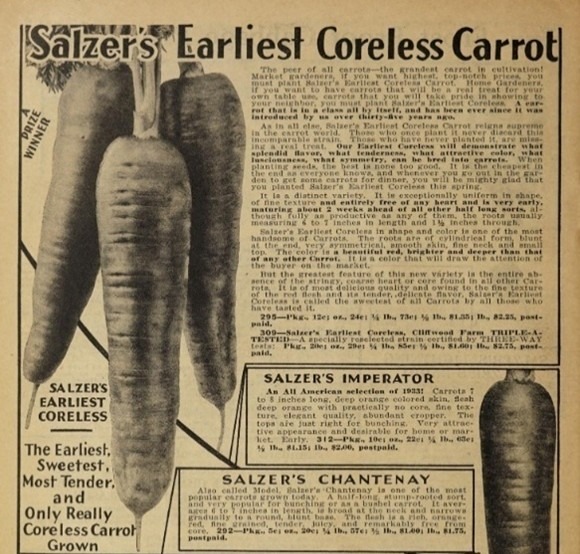
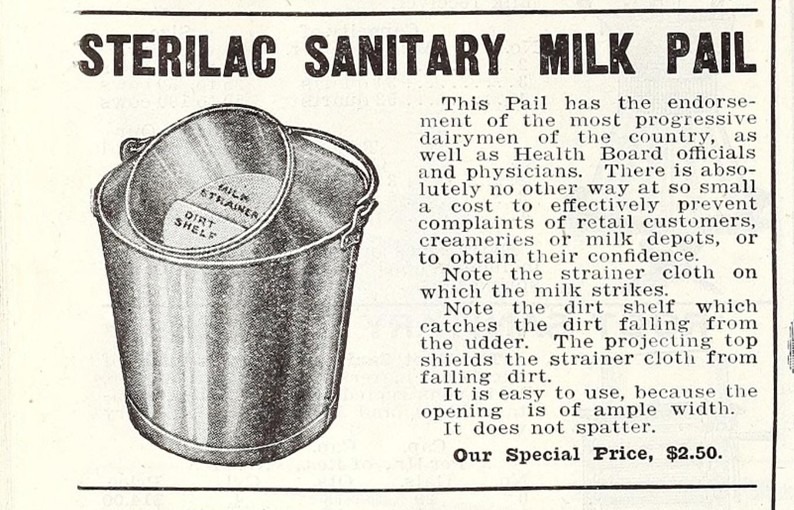
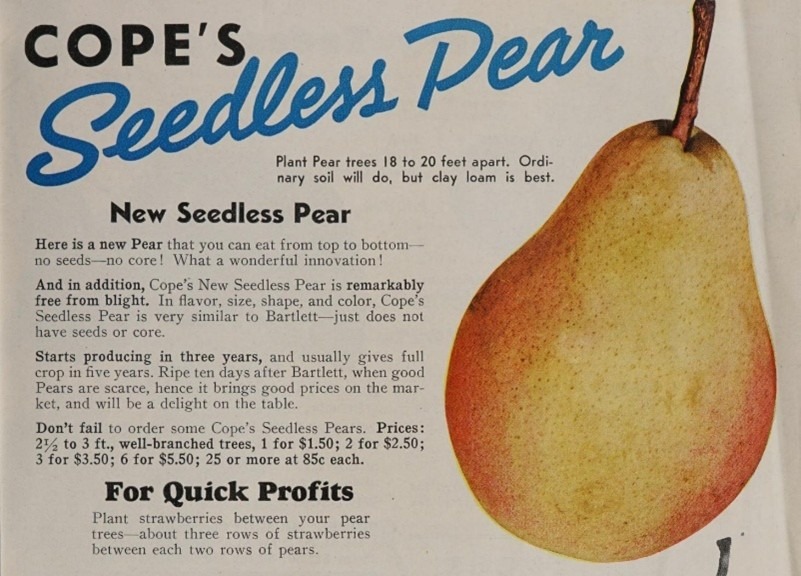
Mickey quotes an observation from a catalog from the Huntington Seed Company as a summary of the catalogs’ conception of innovation. “Millions of Farmers and Gardeners in this country are now puzzling their brain to know how to better their condition, and we feel that we are in position to help them. You must not only have your ground in such shape as to bring out all its producing powers, but you must grow products that bring the most money, make the largest yields, and can be cultivated and harvested for the least expense; also something that not only brings quantity, but possesses a rich quality. Then you will begin to notice improvement. We do not mean to say that what you have been doing is wrong, but times are changing. Old methods will not do. You must have a progressive spirit to successfully meet the demands of the times.” (The Huntington Seed Company, 1896, p. 1). Many products described by the catalogs were touted as new and innovative (e.g., “coreless carrots;” “sanitary milk pails;” “seedless pears”).
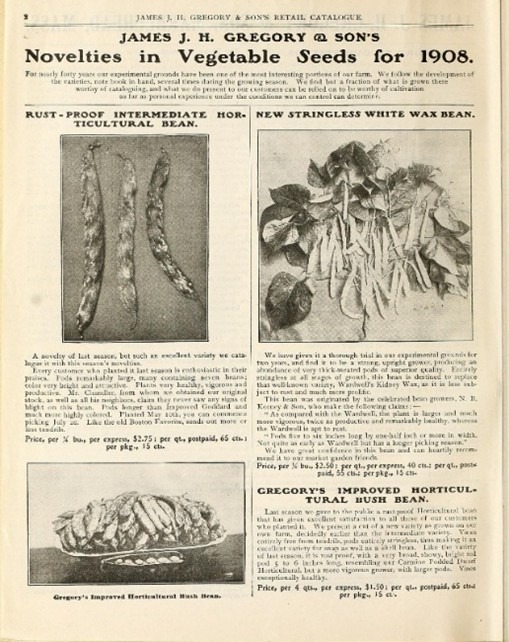
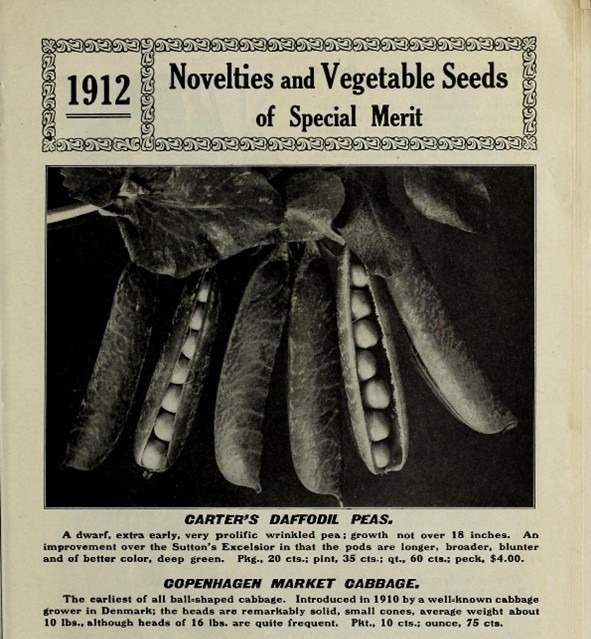
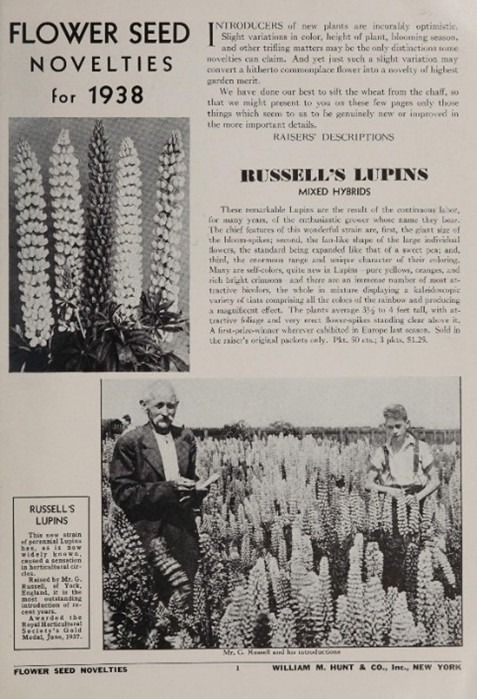
Novelties
“The catalogs sometimes encouraged American gardeners to embrace American native plants for their own gardens, but like the English, they sought new exotic varieties. The seed companies and nurseries of America, too, wanted to offer their customers new plants each season. Such plants were called novelties and were usually placed in the catalog’s opening pages. These novelty pages were frequently printed on a different color of paper stock from the rest of the catalog: a light blue, sometimes a pale yellow, and even a soft pink, while the remaining pages were white. Thus, the novelty pages stood out as soon as the reader opened the catalog. The intent was to make the novelties appear important. They were not like last year’s plants, which were old news and appeared in the back pages of the catalog” (Mickey, 2013, p. 127).
Exotic versus Native Plants
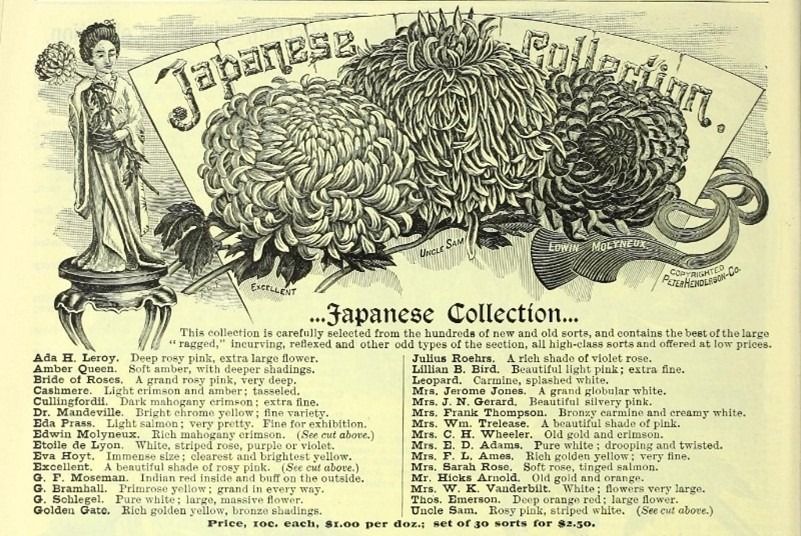
Related to the concept of “novelties, exotic plants imported from outside the United States were often highlighted in the catalogs. “Seed companies and nurseries helped their suburban middle-class readers enjoy exotic plants that at one time only the wealthy could cultivate. Now middling Americans could show off their own Chinese shrubs on the lawn, Japanese vines clinging to the walls of their houses or South American alternanthera plants in containers or carpet beds” (Mickey, 2010, p. 5).
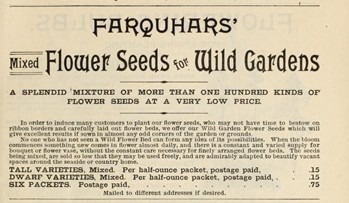
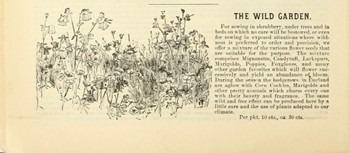
Mack’s 1991 study revealed a dark side of the trade’s insistence on offering offer more and more variety and exoticism to their customers. His review of a large sample of catalogs led him to conclude the following: “Seeds, bulbs, and cuttings of exotic plant species, including plants cultivated exclusively as ornamentals, were being advertised for sale in printed circulars in the United States by 1800. By the end of the 19th century seed trade catalogs were prolific and often listed dozens of exotic species that were already naturalized in the U.S. or new introductions from foreign suppliers. Among the species routinely offered for sale were many now considered noxious (e.g., Berberis vulgaris, Eichhomia crassipes, Isatis tinctoria) or at least undesirable (e.g., Cannabis sativa, Eleusine indica, Lysimachia nummularia)…. The largely unrecognized proliferation of this industry in the 19th century and the ready access that consumers had to these species via mail order contributed to the rapid and extensive dissemination of at least 139 alien species throughout the United States” (p. 257).
Company Buildings
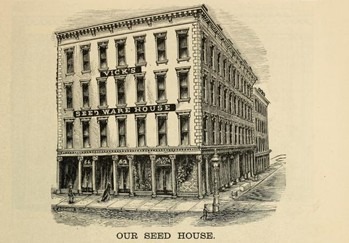
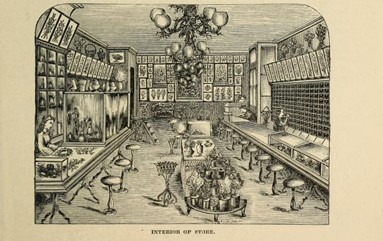
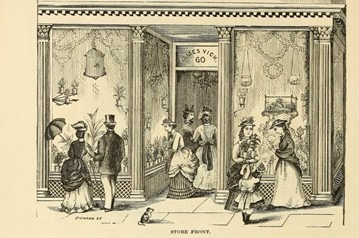
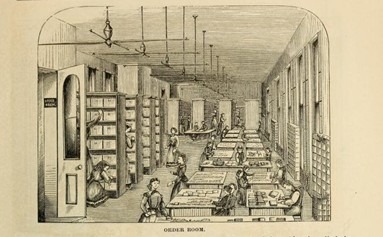
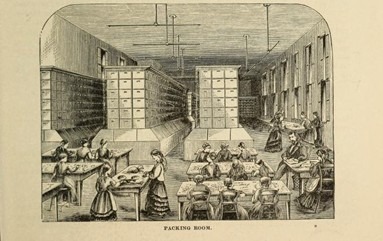
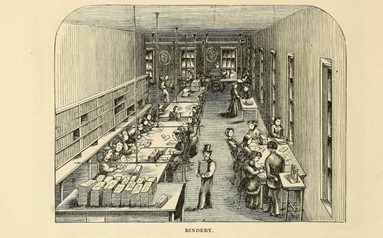
“Another theme that often appeared in catalogs was the important role of the company’s facilities, which included offices where orders were received and filled, where seeds were stored, and where one could find greenhouses, trial gardens, and even box-making factories. This was, after all, a business, and the customer had to be convinced that the seedsman or nursery owner had the most modern buildings….Often illustrated in the company catalog, a business’s facilities were represented as having been built in the latest style, as them most equipped and extensive, and as being capable of handling any orders. Owners wanted the catalog reader to understand that the company was current and had the newest in technology to handle the important business of growing and selling seeds and plants” (Mickey, 2013, p. 136; 138).
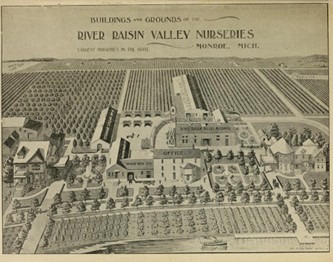
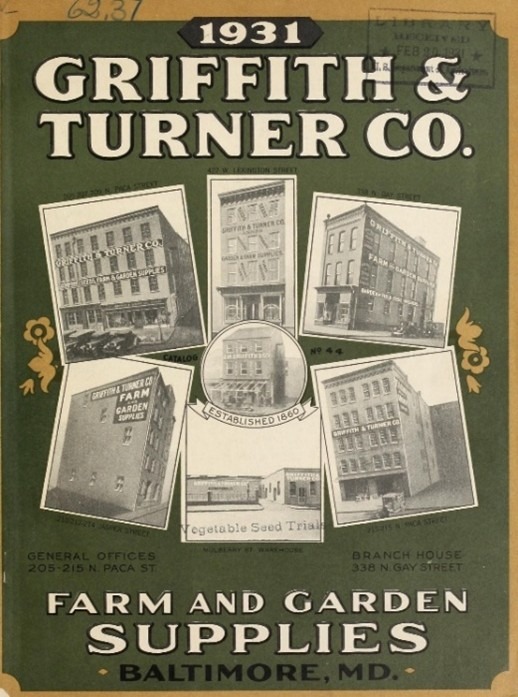
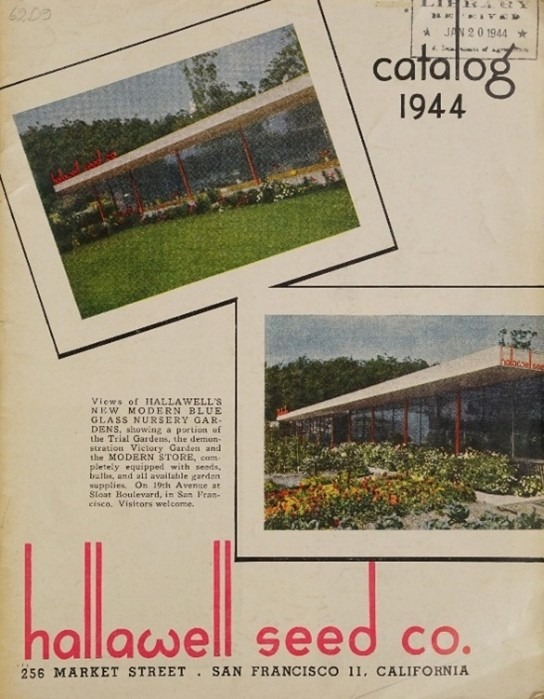
The James Vick Company provided multiple views of their operation in their Floral Guide for 1873.
Awards and Premiums
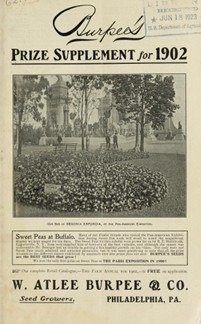
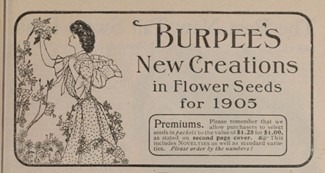
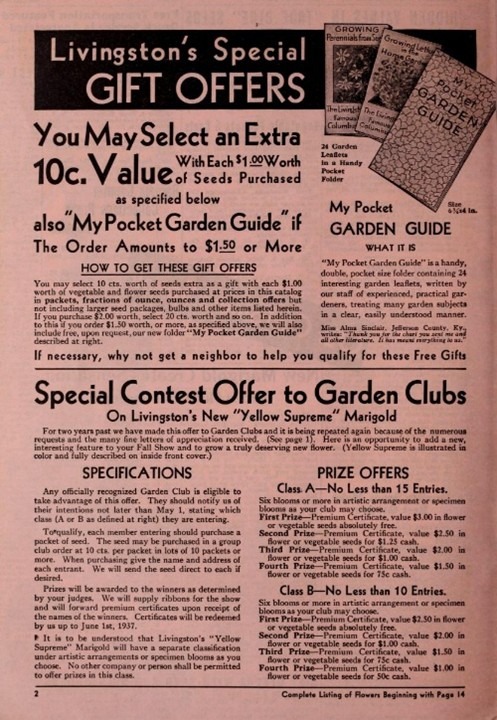
“Nineteenth-century advertising added the attraction of awards and premiums as another marketing strategy in an increasingly competitive environment…Awards and premiums were sent through the mail, but they were also won at fairs and exhibitions, including local flower or horticultural society shows….The seed and nursery industries conducted business much like other industries, showcasing awards for their products and offering premiums. The catalogs reflected that message in word and illustration. The practice has not been lost. Today, to make a purchase more attractive, marketers still entice a customer with a reward” (Mickey, 2013, p. 142-143).
text
text
“Title”
text